If you throw family parties or community events often enough, you start to notice a pattern. The same bounce house that dazzles in July turns into a wind sail in October, and the water slide that seems like magic on a hot day becomes a liability when the forecast dips below 60. Inflatable rentals are wildly versatile, but choosing the right unit for the season is the trick that separates a great party from a stressful one. I plan events for schools, neighborhoods, and private clients, and over the years I’ve learned what works across changing weather, daylight, and age ranges. Consider this a field guide to picking party inflatables that fit spring mud, summer heat, fall winds, and winter chill.
What changes by season
The same three variables drive most decisions: temperature, wind, and ground conditions. Temperature affects material stiffness and blower performance. Wind dictates anchoring and height choices. Ground conditions determine whether stakes are viable and how much mess you’ll be cleaning off the kids. The best bounce house rental for a breezy spring picnic isn’t necessarily the best choice for a leaf-strewn backyard in October.
Knowing a few numbers helps. Most vendors limit setup if steady winds exceed 15 to 20 mph, with lower thresholds for tall inflatable slide rentals. Water slide rentals shine when the air temperature is at least in the mid-70s, preferably warmer. And while vinyl tolerates cold, most operators will advise against outdoor use in freezing conditions, since brittle vinyl can crack and damp fabric takes forever to dry.
Spring: mud, gusts, and early-season excitement
Spring is optimism season. Everyone wants to get outside, but weather swings are real. One Saturday you’re in T‑shirts, the next you’re shivering under a canopy. I like to plan spring inflatable rentals with two priorities: flexibility and safety in variable wind.
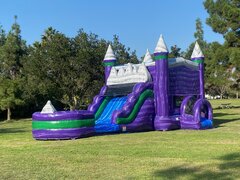
Medium-height inflatable bounce castles are my go-to from late March through May. They’re easier to anchor securely than the tallest slides, and they handle gusts better. Combo bounce house rentals that include a short slide and a pop-up obstacle lane strike a smart balance. The slide satisfies the kids who need motion, while the bounce zone gives space for younger guests who don’t love heights. For a school spring fling, I once paired a 13 by 13 castle with a combo unit and saw lines move twice as fast because kids could circulate between zones without bottlenecks.
If you’re tempted by water, add a detachable splash pad rather than a full water slide. Spring evenings cool quickly, and wet kids get cold. A dry combo with a “misting” add-on works when the midday sun shows up, and it converts back to dry sliding when the temperature dips at 4 p.m. Themed bounce house rentals are strong this time of year, particularly garden, farm, or animal themes that fit spring photos. Themed panels are easy to swap, and kids remember the character, not the exact castle dimensions.
A spring wildcard is ground condition. Lawns are often soft, and parks can still be recovering from winter saturation. Ask the vendor about ground protection. I bring 10 by 10 interlocking mats for entry and exit points, and I set a shoe bin with a hand towel to keep inside surfaces clean. If staking is tricky because of irrigation lines or asphalt, coordinate water barrel anchors. You’ll need a water source and extra time for setup, but it keeps the unit stable when stakes aren’t an option.
For toddlers, early spring is fantastic for short sessions. Toddler bounce house rentals with low walls and easy climbs get a lot of happy squeals without the concussion risk that comes with mixed ages. Separate toddler and big-kid areas if you can. It reduces collisions and lets parents relax.
Summer: water, shade, and crowd flow
Summer is inflatable slide rentals season. When the forecast stays above 80 and kids show up in swimsuits, water slide rentals become the headliner. The key is matching slide height and length to your space, age group, and water access. A 15 to 18 foot slide works for mixed ages up to preteens. Larger slides, 20 feet and up, are a hit with teens but demand more oversight and heavier anchoring. I prefer single-lane slides for younger parties because the landing area stays calmer. Dual-lane slides boost throughput for large groups, but they invite race behavior, so you need a firm attendant.
The unsung challenge of summer inflatable rentals is heat on vinyl. Dark colors get hot enough to sting, particularly around midday. Ask your vendor about lighter colorways, and request shade solutions for queue lines. I’ve used 10 by 10 pop-up tents to cover the waiting area beside a slide, which reduces cranky kids and buys you another two hours of happy play. If space allows, position slides so the sun hits the back, not the climbing wall. Little legs and wet hands grip better when steps aren’t baking.
Water management matters. A standard residential hose delivers around 5 to 10 gallons per minute with average pressure, but most slides use far less once the pad is wet, often 1 to 3 gallons per minute. Plan for 200 to 600 gallons per hour for continuous use, and make sure drainage points away from foundations and high-traffic walkways. I’ve seen backyard parties turn into muddy swamps because the landing pool overflowed toward the patio. A simple downspout extension hose takes the runoff to https://www.allfunbouncinginflatables.com/locations/ a flower bed or gravel.
For mixed ages, combo bounce house rentals with water features are crowd-pleasers. These combine a bounce area, short slide, and often a small splash pool. They keep the littlest kids engaged while older kids rotate through the bigger water slide. If you expect more than 30 kids at peak time, add an inflatable obstacle course. Dry obstacle courses move kids quickly, deliver big laughs, and release some of the competitive energy that can make slide lines chaotic. The 30 to 40 foot units fit most yards and park pads, and they don’t require water, which helps with utility access.
A quick word on safety in heat: establish a water break routine. Every 20 minutes, pause the action and send kids for a drink. Heat stress sneaks up, especially with wet vinyl reflecting sunlight. Also watch the landing zones. When people are hot, they launch themselves further. You want landing pads fully inflated and clear of debris. Keep a towel near the end of a water slide to wipe down the climbing steps if they get slick.
Fall: wind, leaves, and festival season
Fall is the busiest stretch for many event entertainment rentals companies. Schools hold carnivals, churches run trunk-or-treats, and neighborhoods throw block parties before the time change steals the light. Wind becomes the big variable. The leaves look lovely, but gusts will challenge tall slides. This is the season to highlight inflatable obstacle courses and sturdy bounce houses with lower profiles.
For school festivals, I like a three-zone layout: one classic inflatable bounce castle for free play, one 30 to 65 foot obstacle course for throughput and spectacle, and one specialty item like a sports challenge or interactive game. Rotate volunteers through each zone with clear rules: no flips, one at a time on slides, empty pockets before bouncing. With fall crowds over 100, an obstacle course is the pressure valve. It’s the difference between a 20-minute line and a steady five-minute loop.
Leaves and acorns can be surprisingly abrasive. Sweep the area before setup, and have a leaf blower handy for quick cleanups. Entryway mats help keep grit out of the bounce zone, which protects the vinyl and keeps little knees happier. If you’re on a public field, confirm staking depth with the organizer; some parks limit stake length to protect irrigation lines. In that case, weighted anchors, ground plates, and ratchet straps are your friends. An experienced vendor will have the hardware, but it’s worth mentioning when you book.
Themed bounce house rentals shine in October. Halloween themes, harvest graphics, and superhero panels photograph well and make the event feel intentional. For birthday party bounce houses, fall offers great light and cooler air, which keeps grandparents and younger siblings comfortable. Dry slides are a better bet than water unless you live in a warm climate. If kids start arriving in hoodies, a dry combo will keep them engaged without the post-splash shivers.
Wind thresholds need respect. Ask the vendor for their wind policy. Many will pause operations around 15 to 20 mph steady wind or lower if gusts are unpredictable. Tall slides catch more wind than squat castles. If the forecast looks gusty, pivot early to indoor bounce house rentals, especially for toddlers. Gym floors, community centers, and church halls can handle smaller inflatables, and the predictability of climate control eases a lot of parent stress.
Winter: indoor magic and weather windows
Winter parties are entirely doable, but your menu of options changes. Outdoor inflatables can work during mild afternoons if temperatures stay above freezing and winds remain light. The bigger question is moisture. If the sun sets early and the vinyl gets damp, you’ll be helping the crew fold cold material. That’s no fun for anyone. I treat winter as indoor-first for kids party rentals. You trade the giant slide for convenience and peace of mind.
Indoor bounce house rentals come in more sizes than most people realize. There are low-profile units designed for standard gym heights, often 10 to 12 feet tall, and toddler bounce house rentals with soft play elements woven into the floor plan. I once set up a winter birthday with two indoor units: a mini obstacle crawl and a small castle with a ball toss area. Twenty kids rotated beautifully, and parents could chat without coats on. The trick is spacing. Leave at least 5 feet around each unit for exits and blower placement, and ask the venue about dedicated circuits. Blowers typically draw 7 to 12 amps each. Two units can share a 20-amp circuit, but not always, so extension cords and circuit mapping matter.
If you must go outside in winter, pick a compact bounce house with high walls and mesh that blocks some wind while preserving visibility. Skip water entirely. Dry slides are fine if they’re not too tall and the ground is level. The sun angle is low, so check shadows. I aim for early afternoon windows when the ground warms a bit. Keep wipe cloths to dry entry steps if there’s frost or dew. And have a warm-up station indoors with cocoa. It sounds quaint, but I’ve watched morale improve instantly when kids can cycle between bouncing and a cozy corner.
Themes still matter in winter. Holiday graphics, winter wonderland panels, or even a sports theme for a big game party give the event a focal point. Event entertainment rentals also include interactive games that pack well indoors: inflatable axe toss with soft projectiles, basketball shootouts, or soccer darts. These extend entertainment beyond the bounce zone, which keeps older siblings involved.
Matching inflatables to age and group size
The perfect unit for a preschool crowd might frustrate fourth graders. Likewise, one giant obstacle course might dazzle teens but create a logjam in a backyard with 20 kids.
For toddlers and younger kids, prioritize lower step heights, soft barriers, and clear sightlines. Toddler bounce house rentals often integrate small slides and inflated shapes that double as handholds. Limit entry to the same age cohort. Parents relax when they know older kids are busy elsewhere.
For mixed ages at a backyard birthday, combo bounce house rentals are the Swiss Army knife. A 13 by 25 foot footprint fits most yards and delivers enough variety to keep the party moving. Add a small game or a bubble machine nearby for sensory diversity. I keep a 30-minute rotation in mind for birthday party bounce houses: open bounce, cake break, gift time, then back to bounce with renewed energy.
For larger groups, like school events or community fairs, think in lanes. Inflatable obstacle courses and dual-lane slides eat lines efficiently. A 40 foot obstacle course can push through 200 to 300 participants per hour with steady flow, assuming good supervision and clear start-finish signage. Pair it with a standard bounce castle for free play and you’ll capture both the thrill-seekers and the toddlers who just want to hop.
Space, power, and surfaces
Every rental lives or dies by logistics. Measure your setup area including the safe perimeter, not just the unit’s footprint. Vendors publish footprint numbers like 13 by 13 or 15 by 15, but blower placement, tie-downs, and entry steps add real space. Plan two feet of clearance on each side as a baseline, more for slides. Overhead clearance matters too. Low tree branches and string lights have ended more than one setup.
Power is simple if you plan. Each blower needs its own reliable circuit. I pack heavy-duty 12-gauge extension cords no longer than 50 feet when possible. Longer runs drop voltage and weaken the blower. If your outlet is far, ask the vendor to bring a generator. It’s quieter than you think and avoids the “Why did the castle deflate?” moment when someone turns on a hair dryer inside the house.
Surface is another underappreciated variable. Grass is comfortable, forgiving, and easy to stake. Concrete and asphalt need extra protection for the base and weighted anchors. Indoors, bring protective mats for gym floors. Dirt surfaces work but kick up dust. If you must use dirt, plan a shoe station and cover the entry with turf to reduce grit.
Safety basics that actually matter
Most safety advice reads like fine print until you start supervising. Then the details make sense. The two most important rules are capacity control and behavior. Keep to the manufacturer’s occupancy numbers, especially for younger kids. Group bouncers by size, not age. A slim 8-year-old and a stocky 5-year-old don’t bounce the same way. Enforce one-at-a-time on slides and no flips inside the bounce area. Flips are showy and lead to collisions.
Anchoring deserves visible attention. If wind picks up, pause. I’ve paused events twice when gusts crossed 20 mph, and the parents were grateful rather than annoyed. Clear the unit before anyone pulls a plug. Blower off with kids inside is a scary five seconds for them and a stressful minute for you.
Shoes off, glasses off, pockets empty. It’s tedious to repeat, but nothing derails a party faster than a broken phone screen buried in the bounce floor or a scraped shin from a rogue belt buckle. Keep a small first aid kit nearby for minor scrapes, plus hand sanitizer at the entrance. At water events, have a non-slip mat where kids step onto concrete or patio stone.
Themes and photos that stick
Themed bounce house rentals are more than a banner. A good theme sets tone and simplifies decor. For spring, lean into animals, flowers, or pastel castles. Summer loves tropical prints, surf, and bright color blocks that pop in sunlight. Fall is the time for harvest, superheroes, or classic carnival stripes. Winter calls for snowflakes, gingerbread, or sports. Scale decor around the unit. If the inflatable is bold, keep table decor simple. If the unit is a neutral castle, add color with bunting and balloons near, but not tied to, anchor points. Photographers, even the parent with a phone, love a clean backdrop. Leave breathing space around the entry for candid moments.
Budgeting and booking smart
Prices vary by region and season. Expect a standard bounce house rental to range from the low hundreds into the mid hundreds per day, with combo units and inflatable slide rentals higher. Water slides typically cost more than dry slides because of size, wear, and cleanup. Inflatable obstacle courses range widely based on length and features. Delivery, setup, and pickup are usually included within a set radius, with surcharges for distance or stairs.
Spring and fall weekends fill fast because of school and community calendars. Book three to six weeks ahead for choice. Summer has more availability but spikes around holidays. Winter is flexible for indoor venues, though gym calendars can be tight. Ask about weather policies. Reputable vendors allow rescheduling for unsafe conditions. Clarify surface requirements, power needs, and whether they carry party equipment rentals like generators, hoses, and mats. Bundles sometimes save money: a combo unit plus a concession or a small game can cost less than adding the pieces separately.
Two quick checklists you’ll actually use
- Space and power check: measure the setup area including clearance, confirm overhead clearance, identify two separate circuits or request a generator, plan cord paths that won’t trip guests. Weather and safety check: confirm wind forecast and vendor thresholds, choose water features only if temps support it, prep ground protection at entry points, set rules signage and assign an attendant.
Real-world pairings by season
When planning for mixed ages in spring, I like a 13 by 13 inflatable bounce castle paired with a compact combo. The castle gives free play. The combo adds a small slide and pop-ups without raising the wind profile too much. For a backyard with softer soil, use stake sleeves and extra ground tarps to keep the base clean.
Summer sings with one major water slide and a dry inflatable obstacle course. The obstacle course keeps kids moving while they wait for the slide and gives an option for those who don’t love getting soaked. If budget allows, add a toddler splash pad or a mini combo with a shallow pool. Position the water slide where drainage won’t create mud near the house.
Fall belongs to the obstacle course plus a themed bounce. At a fall festival with 200 kids, a 65 foot obstacle course moved lines briskly while a pumpkin-themed bounce house handled younger children. We skipped tall slides because of wind warnings and had a better event for it. Bring rakes and a blower for leaves, and run short sweeps between waves.
Winter works best indoors with low-profile units. A toddler-friendly bounce with a small slide and an inflatable basketball shootout keeps energy up without overwhelming a community center gym. Keep the floor covered at entry points and tape down cord covers. If space is tight, rotate activities in 20-minute blocks.
Choosing a vendor you trust
Reputation counts more than inventory. Look for clear photos of actual units, not just catalog images. Ask for proof of insurance. Read recent reviews that mention on-time delivery, clean equipment, and clear safety practices. The best operators are candid about weather calls and surface limitations and will recommend against a unit that doesn’t fit your site. When a vendor asks about your circuits, sprinkler lines, and turnaround time, that’s a good sign. It means they intend to set you up for a calm day.
It’s easy to get dazzled by the tallest slide or the flashiest theme, but the right inflatable for your season and space is the one that keeps kids smiling and adults relaxed. Spring favors versatile combos and sturdy castles. Summer belongs to water and shade. Fall loves obstacle courses and photogenic themes. Winter leans indoor with smart layouts and low-profile fun. Nail those matches and you’ll turn party logistics into background noise while the memories take center stage.